
Ph.D. in English
The Ph.D. program in English at the University of Florida offers intellectual excellence and professional training in literary studies, film and media studies, cultural studies and critical theory, and rhetoric and writing. Students come to our program from across the United States and around the world, providing a rich, vibrant intellectual community within which to study, train, and work.
Admissions
We admit students who hold the M.A. or who apply directly from their B.A. program. Our goal, irrespective of which degree you already hold, is to evaluate your work on its own excellence and assess your fit with our faculty expertise, other academic resources, and library holdings. All applicants are considered for admission, funding, and additional scholarship support via the common application—no supplementary application materials required. Please visit our page for Prospective Ph.D. Students for detailed information.
Flexible Curriculum
We require all Ph.D. students to complete 30 credits of organized coursework but leave it to students and their doctoral committees to determine which courses to take. Students can generally choose from around a dozen courses each semester on subjects ranging from children’s literature to decolonial ecology, race and narrative form to blue humanities, comics to psychoanalytic theory, and film production to allegory, allegoresis, and the art of reading. Details about current and recent graduate courses are available on our website. Or read our entire English Graduate Student Handbook.
Outstanding Funding Packages
Every student we admit receives a five-year funding package of teaching assistantship, scholarship support, a waiver of all tuition, and inexpensive access to excellent medical insurance including vision and dental coverage. Funding packages vary, but on average our Ph.D. students receive $30,000 of support each year, and additional funding beyond the fifth year is possible for students in good standing. Learn more about our funding packages on our Financial Support page.
Specialized Scholarship and Fellowship Support
The Department of English is fortunate in having significant donor support—including multi-year fellowships—for graduate study in particular fields including American literature, cultural studies and critical theory, folklore, and Victorian studies. We especially encourage applicants in these fields. English also has excellent relationships with several other units on campus, including the programs in Women’s, Gender, and Sexuality Studies, African Studies, European Studies, Latin American Studies, and the Center for Humanities and the Public Sphere. Our students often compete successfully for additional funding through these other units and/or hold internships or assistantships with them.
Vibrant Intellectual Community
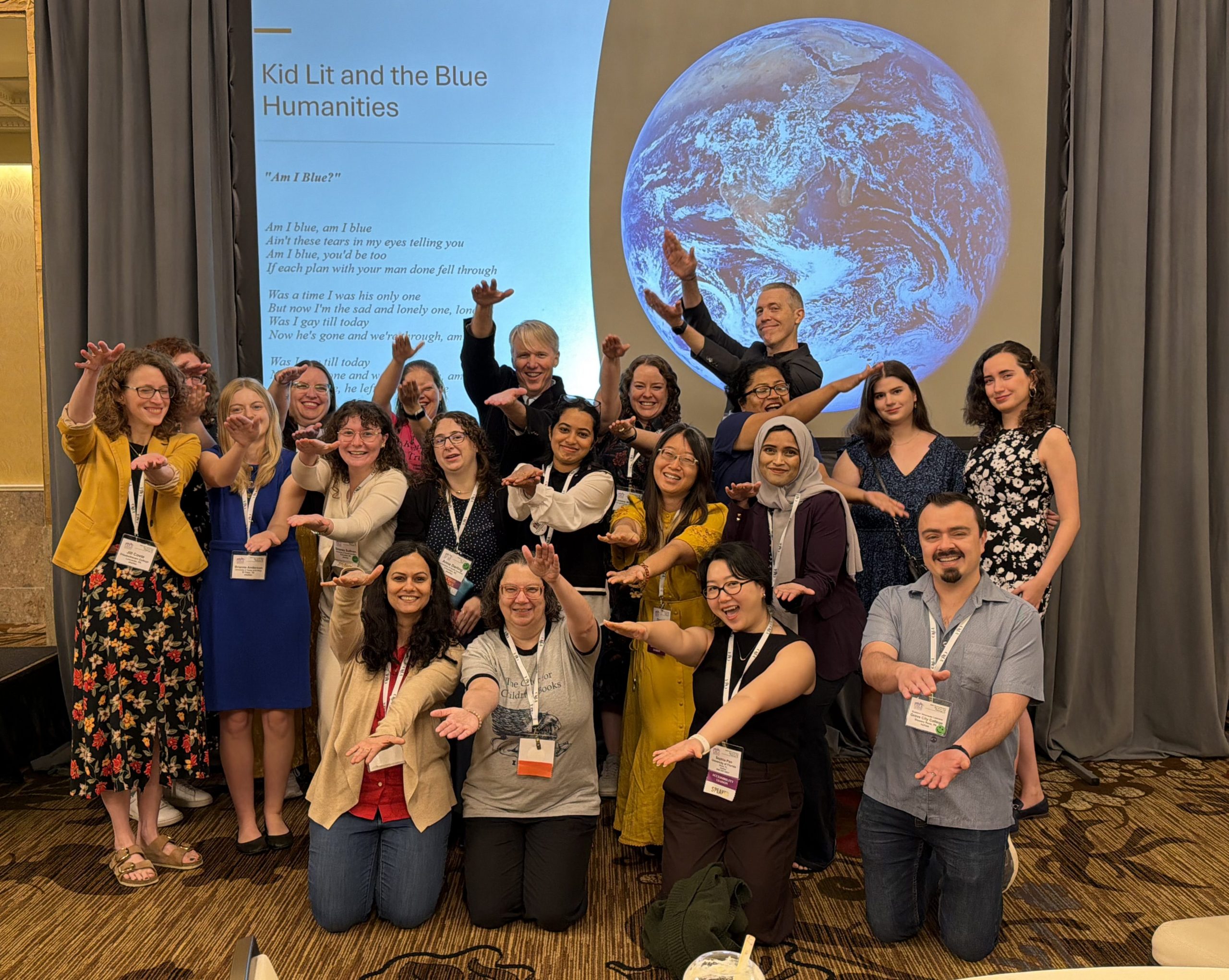
Our graduate program features a variety of clubs and organizations, from the English Graduate Organization, which represents the interests of all our students, to interest groups including the Feminist Collective, the Critical Theory Reading Group, the Graduate Film Group, the Graduate Comics Organization, and a variety of informal writing groups in which students take the lead in supporting and encouraging each other’s work. Students can also work on our critical and literary journals, ImageTexT and Subtropics.
Professional Training and Job Placement
We devote an administrative role and part of our curriculum each year to providing effective preparation for the academic job market, including through our series of job-hunting workshops and by offering regular courses on academic publishing, effective pedagogy, and the development of the dissertation prospectus. Our students also teach courses from first-year writing to senior-level special topics courses for English majors. Most students have taught 5-6 semesters of literature, film, and/or theory courses by the time they graduate. Despite a challenging academic job market, we have continued to enjoy a high rate of success at placing our Ph.D. graduates in academic positions. A list of our recent job placements is available on our website.
Contact
Sean Grass
Graduate Coordinator
sean.grass@ufl.edu